
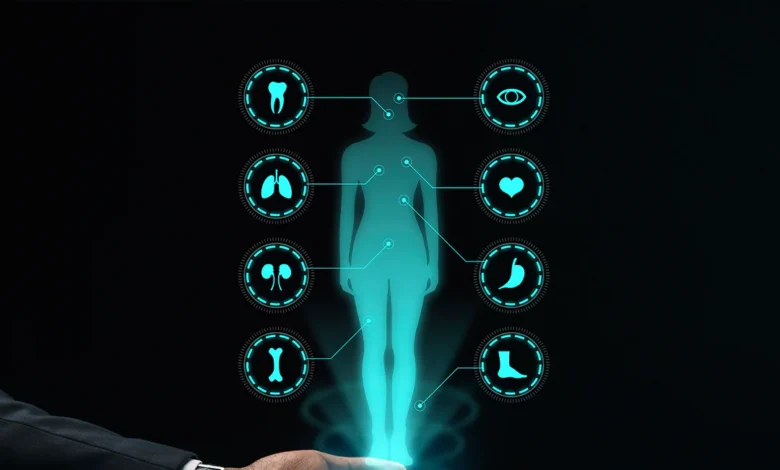
By 2030, the healthcare sector might face a shortage of up to 18 million workers. This gap will push systems to use new tools on a large scale. That’s why we’re keeping a close eye on AI’s role in patient care.
AI in healthcare is moving from hype to real tools. These tools help doctors diagnose better, treat patients more personally, and work more efficiently. Cloud computing and big investments from tech giants like Microsoft and Google Health are making it easier to use these tools in hospitals and clinics.
In this article, we’ll explore how AI is changing how doctors diagnose and treat patients. We’ll look at examples like using AI for imaging and predicting patient outcomes. We’ll also discuss the benefits, like quicker diagnoses and lower costs, and the challenges, like avoiding bias and ensuring privacy.

Key Takeaways
- AI can help meet the quadruple aim: better health, patient experience, clinician experience, and lower costs.
- AI in healthcare already improves diagnostic accuracy in imaging and speeds up treatment decisions.
- The success of AI in patient care depends on quality data, clinician buy-in, and regulatory support.
- The impact of AI on healthcare growth is significant, with market projections and investments showing rapid expansion.
- For AI to be successful, we must address bias, privacy, training, and interoperability from the start.
How Artificial Intelligence is Transforming Patient Diagnosis and Treatment
Artificial intelligence is changing how we diagnose and treat patients in hospitals, clinics, and community programs. We explore the technical basics, clinical impacts, and study methods. This helps us understand the scope before diving into details.
Overview of the main keyword and scope
AI systems mimic human thinking and learning. Subfields like machine learning and deep learning work with data. In healthcare, AI helps with medical imaging, predictive models, virtual assistants, and drug discovery.
Machine learning in patient care uses data from genomics, health records, imaging, and sensors. It finds patterns that humans might miss. We cover acute care, chronic disease management, and population screening.
Why this transformation matters for patients and clinicians
AI leads to faster, more accurate diagnoses. This means quicker treatment and less harm from missed diagnoses. Clinicians at places like Mayo Clinic and Massachusetts General Hospital use AI to sort imaging and focus on urgent cases.
Patients get personalized care through predictive models. Health systems save resources and costs with AI. We emphasize AI should support, not replace, clinical judgment.
How we approach the case study methodology
We use a mixed-methods case study approach to study real-world effects. We look at diagnostic speed, accuracy, readmission rates, and costs. We also gather feedback from clinicians and patients.
Our design includes pre/post comparisons, pilot testing, and iterative refinement. We work with teams of clinicians, data scientists, and ethicists. This ensures AI fits clinical workflows and prioritizes patient safety.
- Step 1: Stakeholder engagement and workflow mapping.
- Step 2: Pilot deployment with measurable endpoints.
- Step 3: Mixed-methods evaluation and iterative improvement.
- Step 4: Scale-up planning with monitoring and governance.
Current Challenges in Patient Diagnosis and Treatment
We face many barriers in diagnosis and care. These slow down patient journeys and put a lot of pressure on doctors. Traditional methods often lead to delays when there are too many tests or samples to process.
Shortages of healthcare workers and broken systems make it hard to get results on time. This can harm patient outcomes and erode trust in healthcare.

Diagnostic delays and misdiagnosis in traditional workflows
Labs and radiology departments often fall behind, causing patients to wait for weeks for answers. This waiting time increases the chance of getting a wrong diagnosis. It also means more visits to the doctor.
We need to understand that just being right after the fact isn’t enough. We must consider the clinical and economic aspects of diagnosis to truly evaluate its success.
Variability in treatment decisions and outcomes
Doctors’ decisions can vary a lot, depending on where they work and what they specialize in. This inconsistency can lead to unpredictable care and results. Training and support tools can help, but they often fail without being used in the right way.
We need systems that are designed with people in mind. They should reduce unnecessary differences while still respecting doctors’ skills and judgment.
Resource constraints and access disparities in the United States
Rural hospitals and clinics with limited resources struggle to keep up with new technology. We must address the issue of unequal access to AI in healthcare. This is crucial to ensure that new technologies don’t widen the gap between different communities.
There are real challenges under HIPAA, like privacy and bias concerns, that make it hard to scale solutions fairly. But, we see a chance to use AI to improve diagnosis and reduce delays. We need focused investments, diverse data sets, and the input of doctors to make these improvements real and available to everyone.
Overview of Artificial Intelligence in Healthcare
We explore how AI in healthcare moves from labs to real-world use. We make it clear what these tools do and why they’re important.
Definitions: AI, machine learning, deep learning in plain language
AI is about algorithms that think like humans, recognizing patterns and making choices. Machine learning in healthcare means systems get better with data. This includes supervised, unsupervised, and reinforcement learning.
Deep learning is about complex neural networks that are great at images and speech. These networks power tasks like reading scans and triaging patients by voice.
Key technologies powering clinical AI solutions
Several technologies make AI in healthcare work. Deep learning is key for analyzing images. Natural language processing helps understand clinical notes and reports.
Reinforcement learning personalizes treatment plans. Ambient intelligence and IoT sensors monitor patients continuously. Cloud computing makes training and deploying models easy. Multi-omic integration combines different types of data for better predictions.
Building trusted AI is a full process. It starts with design and development that focuses on people. Teams from different fields should work together to engage stakeholders.
Pilot studies check if AI works in real life. Evaluations ensure AI is safe and effective. Plans for deployment and updates are crucial. Ongoing monitoring keeps AI safe and working well.
Regulatory and ethical context for AI adoption
We look at the rules that guide new AI tools. In the US, AI medical devices must meet FDA standards. GDPR and HIPAA handle privacy and data sharing. WHO provides guidance on ethics and governance.
There are big ethical issues to address. AI can be biased if it’s not trained on diverse data. Keeping data safe and being accountable for mistakes is key for trust. AI should be explainable and transparent for both rules and use.
Creating ethical AI healthcare means combining technical skill with fairness and safety for patients.
Applications of AI in Medical Imaging and Diagnosis
We look at how artificial intelligence changes medical imaging. It helps doctors find and manage diseases faster. These tools make reading images quicker and more consistent, helping with large-scale screenings.

Radiology workloads have grown too fast for many hospitals. AI helps sort images quickly. It flags urgent cases, like chest X-rays and CTs, so doctors can act fast.
Pathology is moving to digital slides and AI pattern recognition. Algorithms point out suspicious areas in breast and lymph node samples. This saves time and helps doctors make consistent diagnoses.
In ophthalmology and dermatology, AI helps with screening. It checks for diabetic retinopathy and skin cancer, making more tests possible. This increases access to care and speeds up referrals.
AI also helps in treatment planning. It streamlines radiotherapy planning, making it faster. AI also cuts down on paperwork, letting doctors focus on important images.
These uses help doctors see more patients and reach those in need. AI finds tumors and small lesions early. This leads to better treatment options and more continuous care.
| Use Case | Typical Benefit | Representative Outcome |
|---|---|---|
| Chest X-ray triage | Faster prioritization of urgent cases | Reduced time-to-read for suspected pneumonia and pneumothorax |
| Digital pathology | Consistent detection of metastatic foci | Higher detection rates for small lymph node metastases, faster review |
| Retina screening | Wider access to diabetic eye exams | Automated referral triggers with sensitivity and specificity suitable for primary care |
| Dermatology screening | Large-scale lesion classification | Efficient triage of suspicious skin lesions to dermatology clinics |
| Radiotherapy planning | Automated contouring and dose planning support | Reduced planning time and faster treatment starts |
Personalized Treatment and Precision Medicine with AI
AI is changing how we care for patients. It combines genomics, imaging, and medical records into one view. This lets doctors create plans that fit each patient’s unique needs and life situation.
Genomic data interpretation and targeted therapies
Machine learning helps us understand genetic data. It finds important mutations and suggests specific treatments. This is especially useful in cancer, where it helps choose the right drugs for each patient.
Treatment optimization through predictive modeling
We create models to predict how well treatments will work. These models use lab results, images, and patient history. This helps doctors adjust treatments to avoid side effects and find the best option faster.
Real-world examples from oncology and cardiology
AI is already helping in real-world situations. For example, IBM Watson helps doctors choose treatments based on genetic data. Companies like BenevolentAI and Insilico Medicine are also making new drugs faster. In heart disease, AI models can predict risks better than old methods.
We see a future where AI combines all kinds of data to improve care. Digital twins and learning from unlabelled data will lead to treatments that change and improve over time.
AI-Powered Clinical Decision Support Systems
We look at how modern tools are changing healthcare. AI-powered systems are becoming a regular part of hospitals and clinics. We focus on designs that respect time, safety, and effectiveness.

How decision support integrates into clinician workflows
We design with humans in mind, fitting support into their workflow. This means integrating with electronic health records and bedside tablets. Alerts are brief and clear, making it easier for clinicians to follow best practices.
We work with teams from nursing, informatics, and operations. This ensures our goals match clinical and operational needs.
Balancing automation and clinician oversight
We see AI as a helper, not a replacement. It’s about finding the right balance. We make sure clinicians understand the reasoning behind AI suggestions.
Our systems allow clinicians to easily override AI. This keeps them in control while speeding up tasks.
Measuring impact on clinical outcomes and efficiency
We track many things to see how well we’re doing. We look at how well AI works, how fast things get done, and how much it costs. We also check how happy patients are.
We keep a close eye on how things are going. This includes checking AI’s performance over time. We also watch for any problems that might arise.
We use both numbers and stories to evaluate our work. Numbers show we’re making things better and faster. Stories help us improve our tools for clinicians.
Patient Monitoring, Remote Care, and Wearables
We’re seeing big changes in how doctors keep an eye on health outside the clinic. Connected devices and sensors capture data constantly. This lets us spot problems early. Cloud platforms then analyze this data, helping care teams act quickly and wisely.
Continuous monitoring and early warning systems
Wearables and sensors track vital signs and activity. Companies like Apple and Fitbit provide important health data. When something changes, they send alerts to doctors.
Telehealth augmentation with AI-driven triage
We mix virtual visits with AI to improve telehealth. Virtual assistants and chatbots from Babylon and Ada help doctors before they talk to patients. This way, doctors can focus on the most urgent cases and give personalized care.
Data privacy and security considerations for remote monitoring
We must keep patient data safe as we grow remote care. Following HIPAA rules is key. We use strong encryption and access controls to protect data. It’s also important to check models for fairness and test them well.
Practical comparison of remote monitoring approaches
| Approach | Key Tools | Main Benefit | Primary Risk |
|---|---|---|---|
| Wearables + clinician dashboard | Apple Watch, Fitbit, cloud analytics | Continuous physiologic insight for chronic care | Data overload without proper triage |
| Ambient sensing | Emerald touchless sensors, Nest-style passive monitors | Nonintrusive tracking for frail or elderly patients | False positives from environmental noise |
| AI triage + chatbots | Babylon, Ada, integrated EHR workflows | Faster routing to appropriate care level | Model bias if training data lacks diversity |
| Integrated remote monitoring programs | Wearables, telehealth platforms, cloud ML | Coordinated care with early-warning alerts | Complex governance and HIPAA compliance needs |
We think AI for patient monitoring will be key in everyday care. Good telehealth use and careful data handling will shape the future of healthcare. This will be true in the U.S. and around the world.
Case Studies: Real-World Examples of AI Improving Care
We share three case studies that show how AI can improve healthcare. Each example focuses on real results and what users think. We see how testing, feedback, and making changes led to success.

Hospital pilot: reducing diagnostic turnaround time
A major US hospital tested AI in radiology and pathology. They used feedback to improve alerts and reports.
They looked at how fast reports were made and how accurate they were. They found reports were faster and doctors had less work.
Clinic deployment: improving chronic disease management
Outpatient clinics used AI to help with diabetes and heart disease. AI helped identify patients who needed extra care.
AI also sent reminders and helped with routine questions. Doctors said it helped them focus on the most important patients. They tracked how well it worked and what patients thought.
Community program: ai-enabled screening community health
Community programs used AI to screen for diabetes in underserved areas. They used vans and AI tools to quickly check eyes.
These programs worked well and were cost-effective. They looked at how many people were screened and how accurate it was. They also listened to what the community thought.
Below, we summarize key metrics and feedback from each case. We looked at how accurate AI was, how fast it worked, and what people thought. This lets us compare them easily.
| Setting | Intervention | Key Quantitative Metrics | Qualitative Outcomes |
|---|---|---|---|
| Academic hospital | AI imaging + NLP for reports | Turnaround time reduced 30%; sensitivity 92%; specificity 89% | Reduced repetitive work; higher clinician throughput; positive feedback on draft reports |
| Primary care clinics | Predictive analytics + virtual assistant | 30% fewer unplanned admissions; 18% improvement in med adherence; 25% fewer unnecessary visits | Better care prioritization; patients felt more supported; staff workflow smoother |
| Community screening | Automated retinal screening tools | Screening throughput +200%; sensitivity 87%; specificity 90%; lower cost per screened patient | Expanded access in rural areas; higher early-detection referral rates; community acceptance improved |
Benefits and Measurable Outcomes of AI in Healthcare
Clinical teams see big wins with machine learning and automation. AI brings faster workflows, more accurate tests, and smoother patient paths. This lets doctors focus on complex care while AI handles routine tasks.
Improved diagnostic accuracy and speed
AI tools boost detection rates in imaging and pathology. For example, devices for diabetic retinopathy screening are more accurate than regular checks. This means quicker and more precise diagnoses, leading to earlier treatments.
Cloud computing and integrated platforms speed up analysis. This reduces wait times and helps in busy emergency departments.
Reduced costs and increased operational efficiency
We see savings in fewer repeat tests, shorter hospital stays, and lower error rates. AI helps by automating tasks, optimizing schedules, and streamlining care.
Virtual assistants and AI tools cut down paperwork for doctors. This lowers costs and boosts efficiency without sacrificing care quality.
Enhanced patient satisfaction and adherence to treatment
Quicker diagnostics and personalized care plans improve patient experiences. AI-driven reminders and education help patients stick to their treatment plans.
We track metrics like reduced readmissions and higher follow-up rates. These show AI’s positive impact on patient outcomes.
Here are key metrics health systems use to measure AI’s value.
| Metric | Typical Improvement | How AI Drives Change |
|---|---|---|
| Diagnostic sensitivity / specificity | Up to 10–20% gains | Pattern recognition in imaging and pathology increases true positives and reduces false negatives |
| Turnaround time | Reduced by 30–60% | Automated image processing and cloud analysis accelerate reads |
| Length of stay | Shortened by 10–25% | Faster diagnosis and optimized care plans enable earlier discharge |
| Administrative hours per clinician | Cut by 20–40% | AI documentation and scheduling free clinician time for patient care |
| Cost per case | Lowered significantly | Reducing costs with ai-enabled treatment solutions through fewer complications and improved throughput |
It’s important to track these metrics over time to see the value of AI. Real-world results show that focused AI deployments lead to clear, measurable benefits for both patients and healthcare providers.
Risks, Limitations, and Ethical Considerations
When we use AI in healthcare, we must think about the good and the bad. AI can cause problems like unexpected changes, privacy issues, and not working well for everyone. Hospitals and companies need to watch these risks closely and have clear rules.
Bias in training data can hurt patients. If the data doesn’t include everyone, AI tools might not work right for some. We look into why this happens, like biased health records or not enough devices. Then, we work on fixing it to avoid harm.
We need to know who is responsible for mistakes. Questions about blame and being open are important when we buy and use AI. Having clear records, audit trails, and following rules helps figure out who is accountable.
It’s important for doctors to understand AI. They need tools that explain how AI makes decisions. There are ways to make AI more understandable, like simple models or visual maps. These help doctors trust AI and catch problems early.
We must make sure AI is fair for everyone. Working with communities, checking locally, and watching how AI works after it’s used helps avoid unfairness. We need to help small hospitals and rural areas use AI too, so everyone has access.
We should know what AI can and can’t do. Many AI systems just recognize patterns without understanding the whole picture. This means we need to test AI carefully before using it widely.
To keep AI safe, we use many safety measures. These include diverse data, regular checks, being open about results, and teaching doctors about AI. This way, we can use AI to help patients without causing harm.
Implementation Strategies for Healthcare Organizations
We start by mapping needs before choosing tools. A problem-driven, human-centered design helps teams focus on clinical pain points and patient outcomes. Pilots should run in short cycles with tight feedback loops so we can learn fast and limit risk.
We recommend assembling multidisciplinary teams that include clinicians, data scientists, operational leaders, financers, authorizers, implementers, and local champions. This mix speeds decision making and improves acceptance of new workflows. Piloting with those stakeholders lets us test technical fit and clinical value early.
Data systems must scale to mixed formats such as EHRs, imaging, and genomics. Cloud platforms support storage and compute needs while enabling frequent model updates. Good governance pairs data protection with equity checks and post-market surveillance, and we expect collaboration among vendors, providers, and regulators.
Interoperability is essential for day-to-day operations and regulatory compliance. We design interfaces to meet HIPAA requirements and to support FDA pathways where relevant. Phased rollouts, external validation across regions, and vendor or academic partnerships reduce deployment risk.
We prioritize training clinicians AI so care teams understand usability, limits, and interpretation of outputs. Short hands-on sessions, case-based learning, and competency assessments build confidence. Education programs should be continuous and tied to performance metrics.
Measuring impact guides scale decisions. Key metrics include clinical outcome improvements, reduced turnaround time, cost savings, and patient experience scores. We combine statistical, clinical, and economic evaluations to estimate return on investment before broad diffusion.
Ongoing monitoring keeps systems safe and effective after launch. Cybersecurity investments, routine audits, and model drift detection protect patients and support compliance. Maintenance plans must allocate budget and staff time for updates and audits.
Below we compare practical elements that shape a successful rollout across three dimensions: team composition, technical requirements, and evaluation focus.
| Focus Area | What We Do | Why It Matters |
|---|---|---|
| Team Composition | Form multidisciplinary teams with clinicians, data scientists, operational leaders, financers, authorizers, implementers, and champions | Ensures clinical relevance, secures funding, and builds local ownership for smoother adoption |
| Technical Stack | Adopt cloud-enabled platforms that combine EHRs, imaging, and genomics; plan for model updates and cybersecurity | Provides scale, supports data infrastructure interoperability, and meets regulatory demands |
| Governance | Establish data protection, equity checks, post-market surveillance, and regulatory liaison | Maintains trust, reduces bias risk, and aligns with HIPAA and FDA expectations |
| Training | Deliver hands-on sessions, scenario-based drills, and ongoing education focused on interpretation and limitations | Improves clinician confidence, reduces misuse, and speeds safe integration into workflows |
| Evaluation | Use clinical, statistical, and economic measures; track turnaround time, outcomes, costs, and patient experience | Quantifies value, informs ROI, and guides scale versus pivot decisions |
| Rollout Strategy | Phase deployments, validate externally with geographic and temporal hold-outs, partner for co-innovation | Limits disruption, ensures generalizability, and leverages external expertise |
Conclusion
The future of patient care with AI is exciting. It combines human skills with machine smarts. This mix helps doctors, makes care more accessible, and connects patients better.
AI can lead to more precise medicine. It supports the goal of better health, happier patients, lower costs, and happier doctors.
Tools like IDx-DR and IBM Watson for Oncology show AI’s power in healthcare. When we use these tools wisely, we see better results. This is true in many U.S. settings.
To make AI work for healthcare, we need to focus on ethics and privacy. We also need to train doctors and listen to everyone involved. With careful planning, we can make healthcare better and fairer for everyone.
AI In Healthcare: Smarter Diagnosis, Personalized Treatment, Better Outcomes







🚀 Doffl.com – 450+ Tools in One Platform
All-in-one solution for business and productivity. Manage, automate, and grow faster with powerful tools for startups, freelancers, and enterprises.
💡 Highlights:
450+ tools across business, AI, marketing, finance & productivity
Automation & AI-powered workflows (no coding needed)
Complete business management ecosystem
🔥 Includes:
Business systems (ERP, CRM, HR, inventory, finance)
Industry tools (restaurant, gym, real estate, healthcare, etc.)
Marketing & automation (email, SMS, chatbot, referrals
Website builders, forms, popups & content tools
Productivity tools (notes, password manager, file sharing, booking)
🆓 Free Tools:
Text, PDF, image, audio/video tools
Developer tools (JSON, Base64, minifier, regex)
Utilities (QR code, IP lookup, URL shortener, etc.)
💥 Plus: Digital Khata, QR menus, bus tracking, license manager, AI tools & more.
👉 Visit our website: https://doffl.com
🚀 Doffl.com – 450+ Tools in One Platform
All-in-one solution for business and productivity. Manage, automate, and grow faster with powerful tools for startups, freelancers, and enterprises.
💡 Highlights:
450+ tools across business, AI, marketing, finance & productivity
Automation & AI-powered workflows (no coding needed)
Complete business management ecosystem
🔥 Includes:
Business systems (ERP, CRM, HR, inventory, finance)
Industry tools (restaurant, gym, real estate, healthcare, etc.)
Marketing & automation (email, SMS, chatbot, referrals
Website builders, forms, popups & content tools
Productivity tools (notes, password manager, file sharing, booking)
🆓 Free Tools:
Text, PDF, image, audio/video tools
Developer tools (JSON, Base64, minifier, regex)
Utilities (QR code, IP lookup, URL shortener, etc.)
💥 Plus: Digital Khata, QR menus, bus tracking, license manager, AI tools & more.
👉 Visit our website: https://doffl.com
Yo, heard about zh88gameapk. Downloaded it and gave it a whirl. Not bad, honestly. Some interesting games I haven’t seen before. Give it a try if you’re bored of the same old stuff: zh88gameapk
Hey guys, just wanna say 21felizcasino is pretty decent. The slots are fun and I actually won a little something last night. Worth checking out! 21felizcasino
Looking for a new game to download? jj804gamedownload is worth a look! Quick and easy download process, and the game itself is a decent time killer. Check it out: jj804gamedownload
Best platform for local players in the Philippines. It feels tailored to our needs and the bonuses are legit. Big thanks to 77jiliph for the awesome setup.
Best spot for local players. The bonuses are generous and the customer support is actually helpful and responsive. Love playing at ph555jl.
I finally found a platform that actually pays out on time. The customer support is also very responsive and helpful. Big thumbs up for bdr777game
The app installation was smooth and the interface is really intuitive. Best experience I have had in a while. Check out 1777betappdownloadapk for a great time.
The app version is a game changer! I can play anywhere and it doesn’t lag at all. So glad I downloaded jilidayapp.
Finally found a reliable way to access my account without any lag. The login process at lancar138login is super quick and hassle free.
The app version is a game changer. I can play anywhere and the graphics are top notch. Just downloaded pa777app and I am already hooked.
The jackpot hits here feel way more frequent than other places I have tried. Love the variety of slot themes they have available. Highly recommend supermposlot for anyone craving big wins.
Had a lucky streak yesterday and the bonuses were a nice touch. If you are looking for a reliable place to play just go with inyuno777.
The customer support is actually helpful and responsive which is rare these days. I felt safe depositing my money and the games are genuinely exciting. Love jiliuucasino!
Super impressed with the customer support here. They answered my questions quickly and the bonuses are actually worth it. Go for acejiliapp!
Solid platform with a lot of great options. I feel safe depositing here and the odds are very competitive. Definitely giving idoxibet88 a try more often.
Super easy login process and the games load instantly. I love how straightforward everything is here. Best experience so far with 688jililogin
Installation was a breeze and the gameplay is addictive. If you’re into mobile gaming, bdck999gameapk is the way to go.
Everything about this place feels welcoming. The promos are genuine and not just bait. I’m really enjoying my time at idpitaslot.
Simple, clean, and effective. No bloated menus or confusing ads, just straight gaming. Love how br59c keeps it minimal and efficient.
Finally an app that does not crash every five minutes. The login process is seamless and the graphics are top notch. Love how convenient it is to play on the go via evojililoginapp.
Love the graphics and the overall vibe of the platform. Had a great winning streak on phjiligo88 last night!
Really love the vibe of this platform. Everything feels professional and the customer support is top notch. Visit idgemoy88 for the best action.
A very reliable platform for anyone looking for quality gaming. The security makes me feel safe with my deposits. Check ph98jili
Slot fans will seriously fall in love with this place. Every spin feels fair and the bonus rounds actually trigger without skipping a beat. I recommend it to all my friends who love classic fruit machines. mm699slots
The graphics are amazing and the gameplay is very smooth. I really enjoy the variety of themes they have available here. xgjili777
I have tried many platforms but this one feels the most stable. Everything from login to withdrawal is seamless. Highly recommend 10jilicccasinologin.
The slot selection here is top notch and the graphics are crisp. I love how stable the connection is even during peak hours. Check out buy138slotlogin for the best slots.
The login process is seamless and I never encounter any glitches. Everything just works perfectly on 24jiliparklogin.
The bonuses here are actually worth it. I managed to win a decent amount today thanks to their promo. Visit balivegas188 and see for yourself.
This is hands down the number one platform for me. Everything from the deposits to the gameplay is top notch. Visit phno1jili and see for yourself.
Super easy to navigate and the promotions are updated daily. It is definitely one of the most reliable sites I have used. Try ph5jljl
Great platform with a very secure login process. I feel safe depositing my funds here and the customer support is actually helpful. jilibet888login
One of the most trustworthy sites I have come across. The promotions are generous and the overall experience is just seamless. pkdewa90
Honestly a hidden gem. The payout process is quicker than most platforms I have used before. If you are looking for reliability then 5k5k44 is the way to go.
A wonderful platform with a lot of bonuses for new players. I felt welcomed from the moment I signed up. Check out idistanaimpian1
Honestly, the interface is so smooth. I had no trouble accessing my account and the loading speed is impressive. Definitely a reliable spot for gaming. Check out 365luckylogin
The registration was so quick and the welcome bonus is actually generous. I am really enjoying the slot variety here. Definitely visit 55vip777loginregister to get started.
Super easy to navigate and the interface is very user friendly. Great experience so far for a local player. 369jllogin
The game variety here is just insane. I spent hours playing different slots and the payouts are actually fair. jili11games is my new favorite spot.
No more login issues like I had on other sites. This portal is seamless and gets me straight to the action. Cheers to topslot88login for keeping it simple.
The customer support is actually helpful and responsive which is rare these days. I felt safe depositing my money and the games are genuinely exciting. Love jiliuucasino!
Best experience I’ve had in a while. The customer support is actually helpful and they respond quickly to queries. Really appreciate the professionalism. Visit ricabetbr
Finally found a stable link for the app. The installation was smooth and it runs perfectly on my phone. Highly recommend checking out x555comdownload for a better experience.
The game variety here is insane! I love how smooth the interface is even on my old phone. If you love slots, you must try semesta88slot.
2uuu’s a strange one, I’m not gonna lie. The website is straightforward, but the interface is a touch outdated. Worth checking it out if their offerings align with your search at 2uuu.
The slot selection is massive and the hit rate seems much better than other sites I have used. Really enjoying the vibe here. Try 50jilislot
The bonuses here are actually legit and not just bait. I managed to snag a decent win using the welcome offer. gamey088 is definitely worth the hype.
The graphics are top notch and the gameplay is very immersive. It is definitely one of the top choices for gaming in the region. See phjili90
99mxjuegos has a variety of games, from simple slots to tournaments. It’s nothing fancy, but it’s good for a casual play. Give it a look see for yourself 99mxjuegos.
Finally found a version that actually works on my phone without crashing. The interface is very user friendly. Just download the phjuan365apk and start winning.
This is definitely the go-to spot for anyone looking for a fun and rewarding experience. The local support is a huge plus. Visit phpkjili
The app version is just perfect for playing on the go. Very stable and the rewards are awesome. Download winboxcasinoapk and see for yourself!
I really appreciate the customer support here. They answered my query about the deposit within minutes. phparkjili
I’ve tried a few different platforms lately, but the access speed here is top notch. Logging in is a breeze every time. Highly recommend bcgamelogin for anyone who hates waiting for pages to load.
Everything about this site is just easy and efficient. From registration to withdrawal, it is a breeze. ezbetcasino is my new favorite.
Best login portal I have used for this game. No more broken links or downtime, just straight to the fun at luckyplayphlogin.
The data and insights here are incredibly helpful for my strategy. It is a must visit for anyone serious about their game. Check idpaitoangka
The login process is seamless and I didn’t encounter any bugs. Everything just works as it should. Love using surga55login
Really impressed with the bonuses they offer for new players. It feels like they actually care about the user experience. Cheers to vn88tt
Really impressed with the security and the ease of depositing funds. It feels safe and professional which is all I care about. Check out cpc88login for a secure bet.